.png)
Yokai: Supernatural Spirits of Japanese Folklore
Updated: 4 days ago

Yokai (妖怪), pronounced "YO-kai," are the supernatural creatures, spirits, and strange happenings of Japanese folklore. They range from dangerous to goofy to downright helpful.
Yokai come from Japanese folklore told for more than a thousand years, and the word first appeared in the 8th century to refer to strange or mysterious phenomena. They achieved widespread popularity during the Edo period (1603-1868), when cheap printing made illustrated books popular and turned yokai into entertainment characters. In the 1960s, manga artist Shigeru Mizuki brought them back into popularity through his series, GeGeGe no Kitarō.
Today, yokai are have found new audiences through pop culture. Fans of Studio Ghibli films will recognize yokai-inspired characters in Spirited Away and Pom Poko; Yo-kai Watch, a popular Japanese video game and cartoon series, turns yokai into collectible characters who secretly cause life's small mishaps; and even some Pokémon are based on them. Yokai appear in Japan as mascots, on snack packaging, as souvenirs, and much more.
The creatures are known to represent regional fears, or simply serve as stories that teach people to take caution in unknown parts of the woods, treat strangers kindly, or just serve as a source of entertainment and a laugh.
Japanese folklore contains hundreds of different yokai, and researchers have catalogued tens of thousands of folk accounts of them. Here are three to know:

Kappa (河童) Kappa live in rivers and ponds. They are roughly child-sized, with a turtle shell, a beak, and webbed hands. A kappa balances a dish of water on top of its head; this is where its power comes from. Kappa are dangerous and known for dragging people (especially kids) into the water. They can also be helpful, teaching medicine or helping farmers if you befriend them. They can be overpowered by tricking them into bowing. If you bow first, a kappa may bow back, tipping the water on its head and draining its energy.
Fun fact: Kappa love cucumbers. That's why cucumber sushi rolls are called kappa maki.

Tanuki (狸 たぬき) This yokai is based on the real tanuki, a wild raccoon dog native to Japan. In folklore, tanuki are shapeshifters and some of the most beloved yokai in Japan. They're mischievous, fun-loving tricksters who love sake, gambling, and generally having a good time. They are often shown wearing a wide-brimmed straw hat and carrying a bottle of sake. As shapeshifters, tanuki can transform into people, objects, and everyday things like tea kettles, and they love using illusions to lead curious travelers astray in the woods. Tanuki statues are found all over Japan, standing outside shops and restaurants as good-luck charms.
Fun fact: In Tokyo, udon topped with tempura crumbs is called tanuki udon. (But don't worry, there are no actual tanuki involved.)

Kasa-Obake (傘おばけ) Also known as karakasa kozō, these yokai are made from old paper umbrellas. They've got one big eye, a long tongue, and hop around on one or two legs. Not dangerous, just annoying; they mainly enjoy sneaking up on people and giving them a big, slobbery lick. They're often grouped with tsukumogami (付喪神), everyday objects said to come to life after about 100 years.
Fun fact: After World War II, kasa-obake became the go-to mascot for Japanese haunted houses.
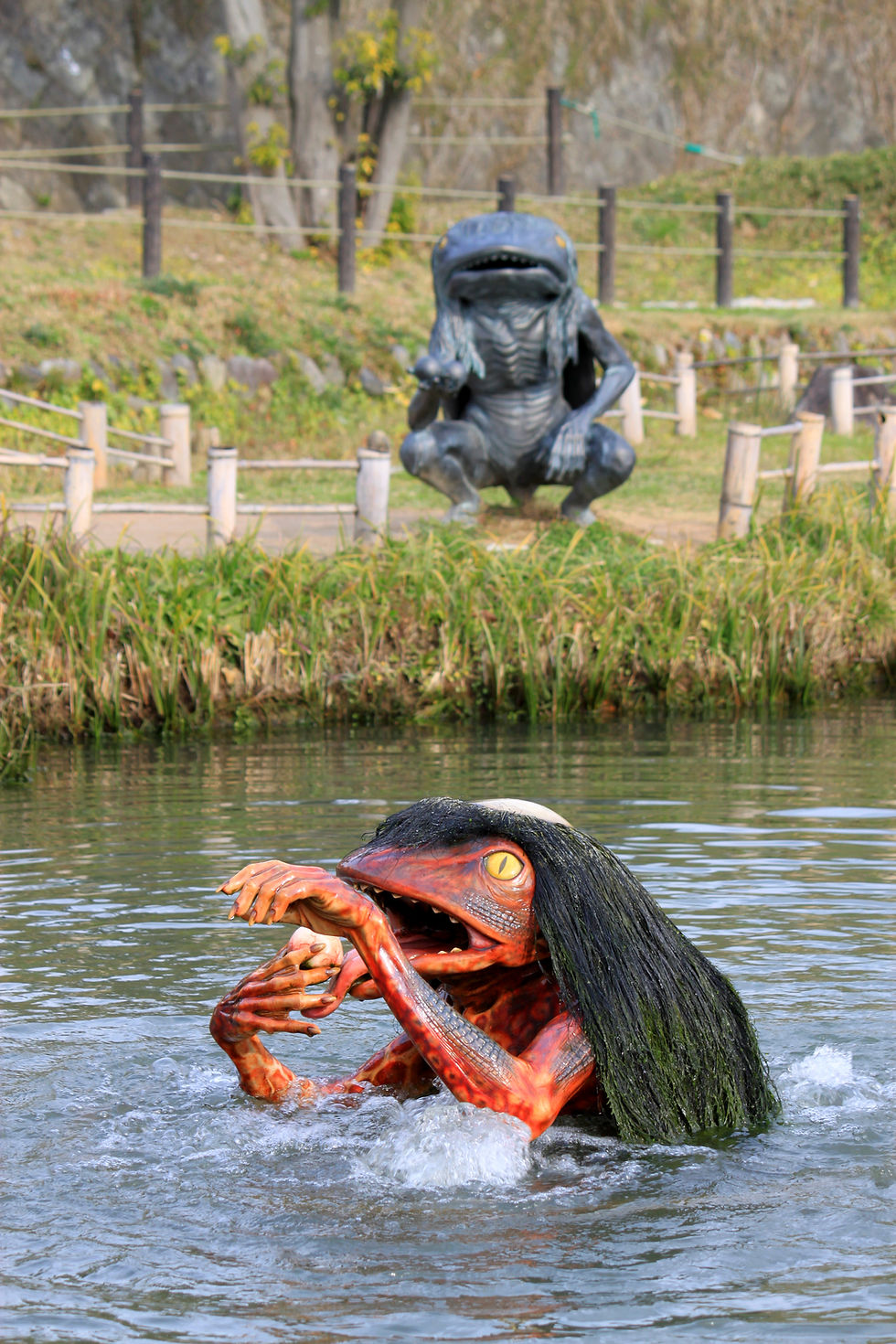
Yokai are more than folklore. They're part of the identity of towns across Japan. In Fukusaki, Hyogo Prefecture, a short trip from Phoenix's sister city of Himeji, Tsujikawayama Park honors hometown folklorist Kunio Yanagita with yokai statues, including a red kappa that rises out of the pond every 15 minutes. In Sakaiminato, Tottori Prefecture, Shigeru Mizuki's hometown, Mizuki Shigeru Road is lined with more than 170 bronze yokai statues based on his work. It has drawn as many as 3.7 million visitors in a single year. And each fall, Uzumasa Kyoto Village hosts the Kyoto YOKAI Festival, a modern take on the legendary Night Parade of One Hundred Demons, complete with costumed yokai, dancing, and sword fighting. Yokai aren't confined to old stories. They're alive, a source of regional pride, and worth traveling to experience.


Comments