.png)

Nature changes beautifully from season to season, people live, and time passes….
Nature, people, and time are the three artists that have created Japanese gardens.

ABOUT
Our Story
The Japanese Friendship Garden, named Rohoen (鷺鳳園), is a joint project of the City of Phoenix and our Sister City Himeji, Japan. Himeji Mayor, Matsuji Totani proposed the garden in 1987 to cement the bonds of friendship between Japan and the United States and particularly between the peoples of Himeji and Phoenix.
The Himeji Gardening and Construction Contractors Association was formed for the specific purpose of designing and constructing the garden. In the ensuing years, the group has made dozens of visits to select the site, investigate soil and climactic conditions, determine suitable plantings, select rock, and oversee construction details.
The teahouse and surrounding tea garden were completed in November 1996, the 20th anniversary of our Sister City relationship. The project features a stroll garden, tea garden, and a dry garden. All the decorative features that you see in the garden and the thousands of hours required to design and guide its construction are gifts from the City of Himeji and its citizens.
OUR MISSION & VISION
Our Mission:
The Japanese Friendship Garden of Phoenix offers a welcoming place to slow down, find deeper presence, and take part in cultural traditions thoughtfully prepared and shared with care. Through an authentic Japanese stroll garden and immersive cultural experiences, visitors experience relief and restoration, carrying a sense of peace with them as they move through the world with curiosity, kindness, and respect.
Vision:
A better way of living has taken root, guided by tradition and practiced with presence, intention, and care. People relate to each other, to nature, and to cultural differences with humility and generosity. The natural world, arts experiences, and cultural exchange enrich the character and well-being of our community.
Values:
Harmony & Tranquility / Wa Kei Sei Jaku (和敬清寂)
Balance and tranquility are essential to reflection, healing, and meaningful connection.
We create an environment where immersive experiences of nature, beauty, and culture invite visitors to slow down, reflect, and carry a sense of peace that extends beyond their time in the Garden, grounded in respect, purity of intention, and harmony with the world around us.
Welcoming with Care and Respect / Omotenashi (おもてなし)
How people are cared for shapes how safe, seen, and valued they feel.
We practice Omotenashi through care, kindness, and respect, first in how staff and volunteers work together, and then in the attention and preparation that shape every visitor’s experience of the Garden.
The Past Informs the Future / Onko-chishin (温故知新)
Understanding the past is essential to shaping a future with integrity.
We learn from what has been handed down and carry it forward with intention, honoring the Garden’s origins and cultural foundations while adapting thoughtfully so the Garden remains alive, relevant, and responsive to its time and place.
Lifelong Learning & Curiosity / Hagukumi (育み)
Growth happens through sustained curiosity, experience, and reflection over time.
We cultivate learning and growth as a lifelong practice, creating opportunities for learners of all ages to build skills, gain new understanding, and deepen connection to culture, nature, and self through instruction, observation, and experience.
Craft, Care, and Excellence / Yuiitsu Muni (唯一無二)
Quality is achieved through patience, care, and attention to detail.
We hold ourselves to a high standard of craftsmanship, honoring Japanese gardening traditions and cultural practices even when they require more time, effort, and restraint, knowing that quality is felt as much as it is seen, and that this dedication shapes an experience that is uniquely ours.
Connection & Community / Tsunagari (つながり)
Meaningful places are strengthened through shared care and responsibility.
Inspired by the partnership between Phoenix and our Sister City Himeji, we cultivate connection among cultures, neighbors, visitors, and generations so the Garden may continue as a living expression of shared care.
OUR GARDEN
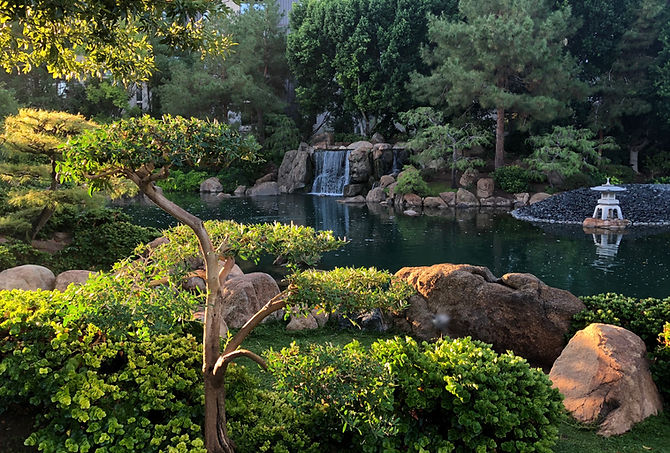
The Japanese Friendship Garden of Phoenix, Rohoen, is an authentic 3.5 acre Japanese Stroll Garden with a tea garden and a tea house. This tranquil and beautiful setting features more than 1,500 tons of hand-picked rock, stone foot bridges, lanterns and more than 85 varieties of plants. As you stroll the path, you will enjoy flowing streams, a 14-foot waterfall, and a koi pond with over 300 colorful Koi fish.
Our Name - Rohoen
The devoted and friendly relationship between the Sister Cities of Phoenix and Himeji, Japan is reflected in the name chosen by its creators.
-
鷺 Ro - Japanese word for Heron, a symbol of Himeji City. Shira Sagi Jou, or the White Heron, is the name of the famous Himeji Castle, a UNESCO World Heritage Site.
-
鳳 Ho - Japanese word for the mythical Phoenix bird.
-
園 En - Japanese word for Garden.
Our Sister City - Himeji
Himeji became a Phoenix Sister City in November 1976 and is one of ten Sister Cities around the globe. Phoenix and Himeji participate in business, governmental, cultural and educational exchanges that promote international goodwill and understanding. The Garden is the shared cultural vision of the cities of Phoenix and Himeji.
Our Design - Hide & Reveal
Rohoen's stroll garden was designed by Mr. Nozomu Okita in the traditional miegakure (見え隠れ) style. Miegakure or hide-and-reveal design, is prevalent in Japanese stroll gardens where the entirety of the garden is never visible at once. Instead, the viewer is led to uncover intentionally hidden sights and sounds of the landscape while strolling along its curved paths.
Our Board- A Non-profit Organization
The Japanese Friendship Garden of Phoenix, Inc. is a non-profit 501(c)(3) organization governed by a Board of Directors. The Board of Directors is an integral part of the organization. They oversee the performance of maintenance, funding, and program development of the Garden.
The Garden operates in a large part through the support of community. Please see: Make a donation, Plant donations, Become a volunteer, or Become a member, to explore the many ways you can help the Garden grow!